Some records make sense on their own. Others reveal their real character when placed next to something unexpected.
That’s where the art of selection begins.
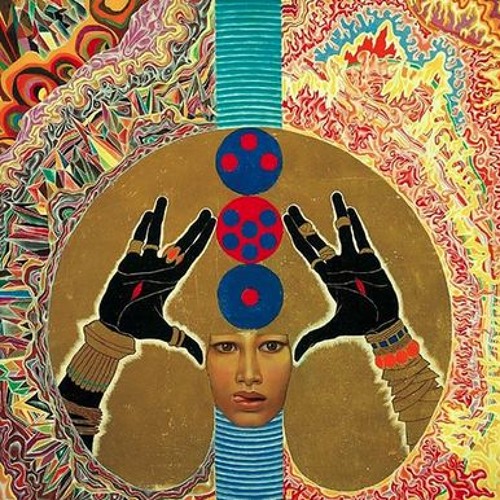
With 70s Trilogy, Part III, Lau, aka A Macaca, moves through a musical landscape that refuses to sit still. Soul bleeds into psychedelia, funk meets folk, jazz wanders into unfamiliar territory, and the line between the strange and the beautiful becomes increasingly difficult to draw. Across 24 tracks, the common thread isn’t a single genre or a strict historical period. It’s the instinct to follow a sound wherever it leads.
Shuggie Otis’ Sweet Thang sets the scene with a laid-back, blues-soaked strain of psychedelic soul. Then Dr. John’s Gris-Gris Gumbo Ya Ya takes us somewhere darker and more elusive, deep into the voodoo-inflected musical world of New Orleans. It’s a sharp change of scenery, but an entirely natural one: both records understand that atmosphere can be just as powerful as melody.
Hamilton Bohannon’s Save Their Souls shifts the focus to rhythm. Bohannon’s musical language was built on repetition, but never on inertia. The groove locks in, the details accumulate, and the body begins to understand what the mind doesn’t need to explain. This is funk stripped to its essential mechanics — movement as both discipline and release.
From there, the selection keeps its distance from the obvious. Smithstonian’s Mississippi Mud and Breakout Blues’ Warm Up My Lips sit alongside Lyn Christopher’s Take Me With You, opening up a less predictable side of the decade’s musical landscape. The appeal of a sequence like this lies partly in the unfamiliar names, but rarity alone has never been enough. A record earns its place through character: a particular texture, an unusual arrangement, a voice that stays with you, or a groove that refuses to let go.
Christine Harwood’s Wooden Ships leads into another corner of the seventies imagination, before Ryo Kawasaki’s Bamboo Child brings a different rhythmic vocabulary into focus. Dorothy Ashby’s The Moving Finger adds the distinctive voice of her jazz harp, an instrument she transformed into something far beyond its conventional role. Her music occupies a space where sophistication never comes at the expense of feeling.
Omega’s Kergeskezu favagok extends the journey into the European psychedelic underground. It’s one of the pleasures of looking beyond familiar reference points: the discovery that musical experimentation was happening across scenes and borders, often developing its own language away from the centres that dominate popular histories.
Then the soul records begin to open up.
Rotary Connection’s I Am the Black Gold of the Sun remains a remarkable meeting of orchestral scale, psychedelic imagination and spiritual intensity. It stretches the vocabulary of soul without losing its emotional centre. Merry Clayton’s Southern Man brings a harder vocal force, while Myra Barnes’ The Message from the Soul Sisters (Parts 1 & 2) connects the music to a more direct, uncompromising expression of soul.
These records carry more than groove. They carry conviction. The performances feel inhabited, the arrangements have room to breathe, and the voices occupy the music rather than simply sitting on top of it.
Henry Arland’s Mamy Blue introduces a more wistful shade before Timmy Thomas’ Why Can't We Live Together pares everything back. Its spare organ, restrained rhythm and unadorned vocal demonstrate a different kind of musical confidence. Nothing needs to be added for effect. The repetition is the point; the space around it gives the song its weight.
Elsewhere, the psychedelic thread becomes more pronounced. The Doors’ Soft Parade and The Zombies’ Time of the Season represent different approaches to the late-sixties expansion of rock, from theatrical excess to a more elusive, seductive groove. The Brian Jonestown Massacre’s Malela brings a later echo of psychedelic music’s enduring pull, while Spleen’s Along Came Sam adds another turn away from the expected.
What matters here is not whether every record belongs to the same moment in history. It’s what happens when they share the same musical conversation. A mix can be a form of quiet argument: one track changes the meaning of the previous one, while the next opens a possibility you hadn't considered.
The final selections turn toward more intimate territory. Susan Christie’s Rainy Day carries the singular appeal of outsider folk, where fragility and strangeness can be more compelling than polish. Secos e Molhados’ O Doce e o Amargo introduces the distinctive world of Brazilian art rock, followed by Can’s She Brings the Rain, a beautifully restrained counterpoint to the more restless sounds elsewhere in the selection.
Elizabeth Cotten’s Freight Train brings the focus back to the fundamentals: voice, guitar and a melody that needs no elaborate framing. It’s a reminder that musical depth isn't necessarily a question of complexity. Sometimes the most enduring ideas are the ones that survive with the least amount of interference.
Linda Perhacs’ Chimacum Rain offers a fitting final point of reference — delicate, otherworldly and suspended somewhere between folk and psychedelia. Her music has a way of making intimacy feel expansive, as if a small, personal thought could open into an entire landscape.
Taken together, these 24 selections suggest a way of listening that values connection over classification. The seventies are the starting point, not a boundary. Soul, funk, jazz, folk and psychedelia become different routes through a much wider musical world, with later echoes and older traditions finding their place along the way.
For a selector, the real work happens between the records. Not simply finding something rare, but knowing why it belongs beside something else. Not proving how much music you know, but creating the conditions for someone else to discover something new.
That’s the difference between collecting records and telling a story with them.
Listen: 70s Trilogy, Part III — Lau // A Macaca on SoundCloud
24 selections curated by Lau // A Macaca. Soul, funk, jazz, folk, psychedelia and beyond.
Comments
views